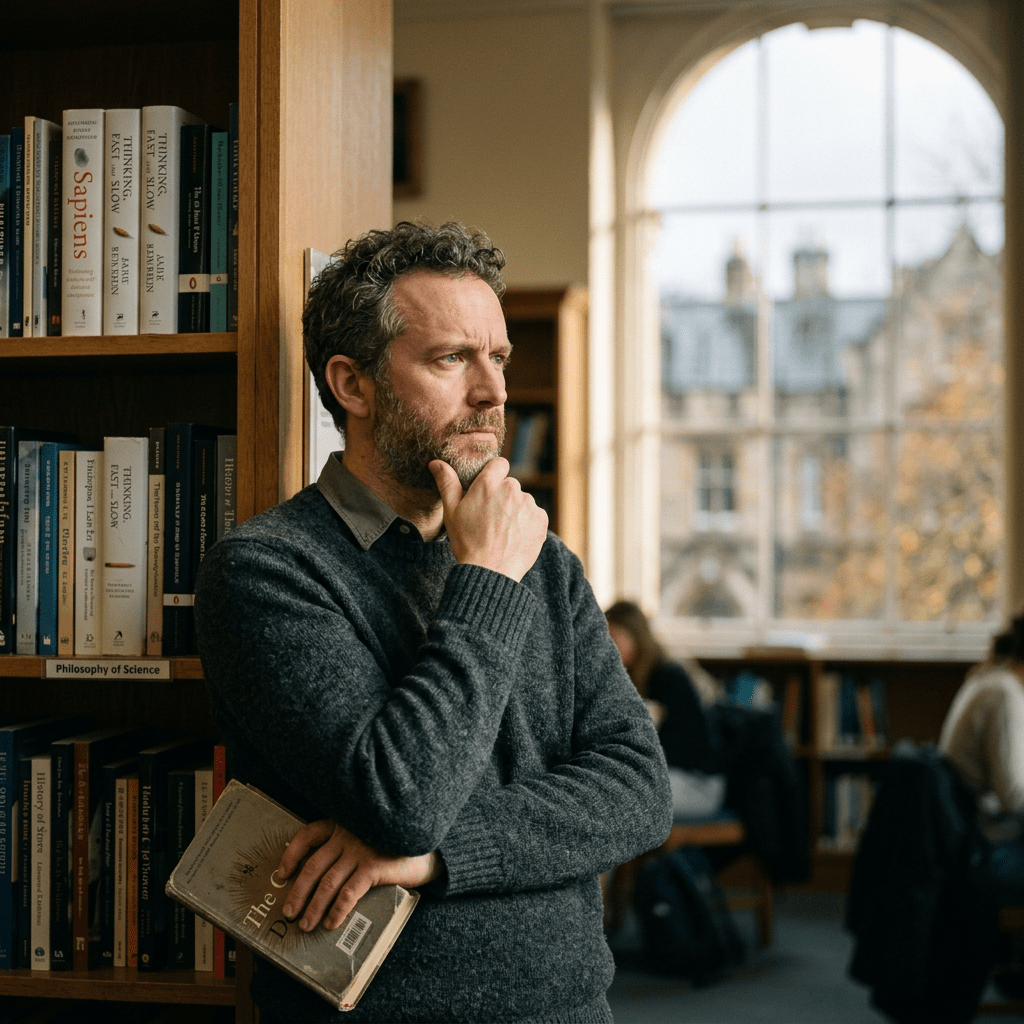
Atheism and the Search for Meaning: Why Some People Reject Belief in God
Introduction
Throughout human history, religion has played a central role in shaping cultures, governments, moral systems, and individual identities. Yet not all people accept religious beliefs or the existence of a divine being. Atheism, broadly defined as the absence of belief in gods or deities, has gained increasing visibility in modern society. While many individuals embrace religious faith as a source of purpose and guidance, others conclude that belief in a supernatural creator is unsupported by evidence. Understanding why people become atheists requires an examination of philosophical reasoning, scientific discoveries, personal experiences, and religious skepticism.
This paper explores the reasons individuals adopt atheism, examines influential thinkers associated with atheist arguments, and considers a theological question often raised in discussions between believers and nonbelievers: If all human beings are considered children of God, why does Jesus occupy a unique position within Christianity?
Understanding Atheism
Atheism is not a religion, nor is it a unified belief system. Instead, it is generally characterized by the absence of belief in a god or gods. Some atheists actively argue against the existence of deities, while others simply remain unconvinced by the evidence presented by religious traditions.
Many atheists emphasize critical thinking, empirical evidence, and scientific inquiry when evaluating claims about the supernatural. Their position often stems from the principle that extraordinary claims require extraordinary evidence. Since the existence of God cannot be directly observed or measured through scientific methods, many atheists conclude that belief is unwarranted.
It is important to recognize that atheism exists on a spectrum. Some atheists assert that gods do not exist, while others maintain that there is insufficient evidence to justify belief. This distinction is significant because many contemporary atheists do not claim to have disproven God; rather, they argue that the burden of proof lies with those making supernatural claims.
Why People Become Atheists
Scientific Explanations of the Universe
One of the most common reasons people adopt atheism is the advancement of scientific knowledge. Historically, many natural phenomena were explained through religious beliefs. Thunderstorms, disease, earthquakes, and the origins of life were often attributed to divine action.
Modern science offers natural explanations for many of these phenomena. The theory of evolution explains biological diversity through natural selection, while cosmology explores the origins and development of the universe through theories such as the Big Bang. As scientific understanding expands, some individuals conclude that supernatural explanations are no longer necessary.
The Problem of Evil
Another significant factor influencing atheism is the philosophical problem of evil. This argument asks how a loving, all-powerful, and all-knowing God could allow suffering, injustice, and tragedy to exist.
Natural disasters, childhood illnesses, wars, and human cruelty lead some individuals to question whether an omnipotent and benevolent deity exists. If God has the power to prevent suffering but chooses not to, critics argue that such a deity may not be perfectly good. Conversely, if God wishes to prevent suffering but lacks the power to do so, then God may not be all-powerful.
Although theologians have developed various responses to this challenge, the problem of evil remains one of the most influential arguments cited by atheists.
Religious Disagreement
The existence of thousands of religions and denominations also contributes to skepticism. Different faiths often make conflicting claims about the nature of God, salvation, morality, and the afterlife.
Some atheists argue that if one religion possessed undeniable truth, humanity would likely exhibit greater agreement regarding spiritual matters. The diversity of religious beliefs leads some individuals to conclude that religions are human creations shaped by culture, history, and geography.
Personal Experiences
Personal experiences often play a significant role in an individual’s movement toward atheism. Some people lose faith after experiencing tragedy, unanswered prayers, or negative encounters with religious institutions.
Others report that studying philosophy, science, or comparative religion led them to reevaluate beliefs they previously accepted without question. For many atheists, disbelief develops gradually rather than through a single event.
Influential Thinkers and Arguments for Atheism
While no individual has conclusively proven that God does not exist, several influential thinkers have presented arguments challenging religious belief.
David Hume
Scottish philosopher David Hume questioned traditional arguments for God’s existence. He argued that human knowledge is limited by experience and that miraculous claims should be viewed with skepticism because they often lack sufficient evidence.
Friedrich Nietzsche
German philosopher Friedrich Nietzsche famously declared that “God is dead,” not as a literal statement but as a cultural observation. He argued that traditional religious authority was losing influence in modern society and that humanity would need to create meaning independently.
Bertrand Russell
British philosopher Bertrand Russell criticized religious arguments and maintained that belief should be based on evidence rather than tradition or authority. Russell viewed skepticism as an essential component of intellectual honesty.
Richard Dawkins
Evolutionary biologist Richard Dawkins has become one of the most recognizable contemporary advocates for atheism. In The God Delusion, he argues that scientific explanations provide a more reliable understanding of reality than supernatural beliefs.
Christopher Hitchens
Journalist and author Christopher Hitchens challenged religion’s influence on politics and society. He argued that moral behavior does not require religious belief and that human beings are capable of ethical conduct through reason and empathy.
While these thinkers offered critiques of religion, it is important to note that none claimed to provide definitive proof against God’s existence. Instead, they presented philosophical and scientific arguments intended to question the rational basis for religious faith.
If All Humans Are God’s Children, Why Is Jesus Different?
One of the most important distinctions between Christianity and many other belief systems concerns the identity of Jesus Christ.
Christian theology generally teaches that all human beings are children of God in the sense that they are created by God and loved by Him. However, Christians believe Jesus occupies a unique status.
According to traditional Christian doctrine, Jesus is not merely a child of God but the Son of God in a singular and divine sense. Christians believe Jesus is both fully human and fully divine, a concept known as the Incarnation. The Gospel of John describes Jesus as the eternal Word of God who became flesh and lived among humanity.
From this perspective, Jesus stands apart because Christians believe he possesses a divine nature that ordinary humans do not possess. Furthermore, Christianity teaches that Jesus’ death and resurrection provide a means of reconciliation between God and humanity.
Critics and non-Christians often challenge these claims, arguing that Jesus was a moral teacher, prophet, or historical figure rather than a divine being. The debate over Jesus’ identity remains one of the most significant and enduring questions in religious history.
Conclusion
Atheism represents a complex philosophical position that arises from diverse motivations, including scientific understanding, skepticism toward religious claims, personal experiences, and concerns regarding suffering and evil. While influential thinkers such as David Hume, Bertrand Russell, Richard Dawkins, and Christopher Hitchens have presented compelling critiques of religious belief, none have conclusively proven that God does not exist. Instead, they argue that the available evidence does not justify belief in a deity.
The question of whether God exists remains one of humanity’s most profound and contested issues. Likewise, the unique status of Jesus within Christianity continues to distinguish Christian theology from both atheism and other religious traditions. Ultimately, the discussion between belief and disbelief challenges individuals to examine evidence, reason, faith, and personal experience in their search for truth.
Works Cited
Dawkins, Richard. The God Delusion. Houghton Mifflin, 2006.
Hitchens, Christopher. God Is Not Great: How Religion Poisons Everything. Twelve Books, 2007.
Hume, David. An Enquiry Concerning Human Understanding. Oxford University Press, 2007.
Nietzsche, Friedrich. The Gay Science. Vintage Books, 1974.
The Holy Bible, New International Version. Zondervan, 2011.
Russell, Bertrand. Why I Am Not a Christian and Other Essays on Religion and Related Subjects. Routledge, 2004.
Sagan, Carl. The Demon-Haunted World: Science as a Candle in the Dark. Ballantine Books, 1997.

 The Sarcastic Swede
Leave a comment