Abstract
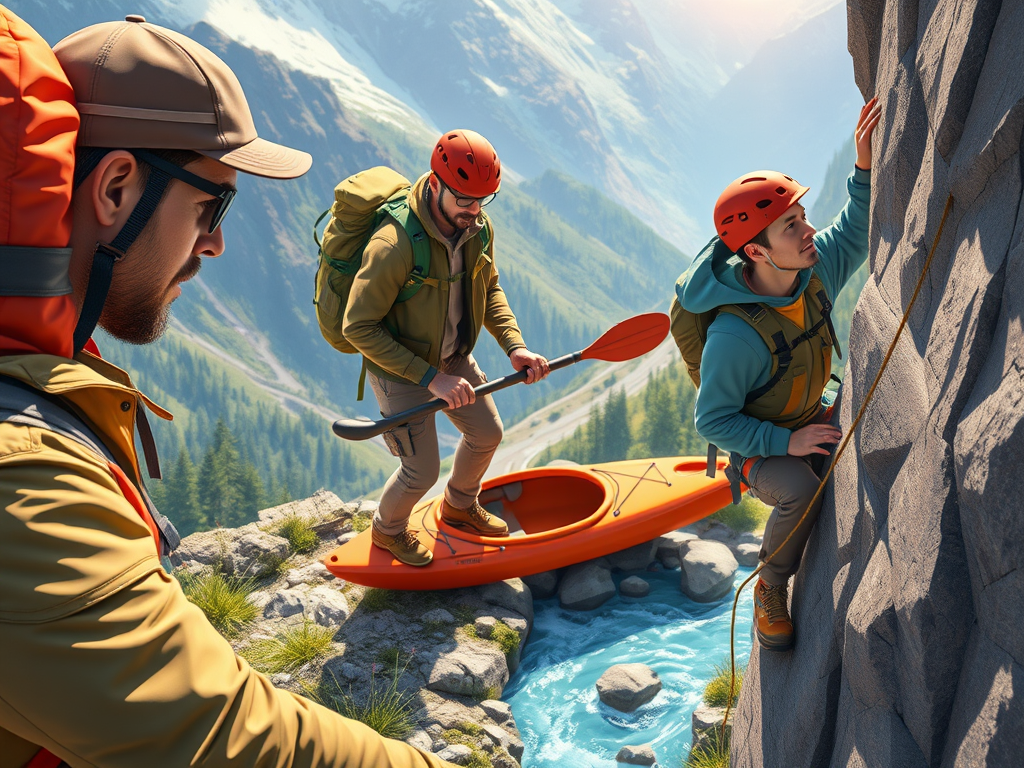
Personal safety remains the single largest variable an outdoor enthusiast can control. This expanded essay revisits three mutually reinforcing pillars—situational awareness, site selection, and observational awareness—to offer an integrated, evidence-informed model for staying safe in wilderness and semi-wild recreation settings. New visual aids (Figures 1–2) clarify key concepts, and interactive prompts invite readers to apply the material to their own adventures. An enlarged practical-recommendations table translates theory into field-ready actions.
Keywords: personal safety, outdoor recreation, situational awareness, campsite selection, observational skills
Introduction
Outdoor participation in North America rose by roughly 20 percent during the post-pandemic years, yet search-and-rescue (SAR) activations climbed at nearly double that rate (Outdoor Industry Association, 2025). While technology—GPS trackers, smartphone “check-in” features, satellite messengers—can reduce response times, prevention still hinges on the human operator. The purpose of this paper is to explore how three domains of personal safety—situational awareness, site selection, and observational awareness—interlock to keep outdoor users off SAR ledgers and firmly in the fun zone.
Key Takeaways
- SAR calls are rising faster than participation—prevention matters more than ever.
- The human element remains the decisive safety factor despite tech advances.
- Situational awareness, site selection, and observational awareness create a dynamic safety loop.
Reflection Prompt: Think back to your last trip. What was the closest you came to needing outside help, and what factor (awareness, site, observation) could have changed the outcome?
Situational Awareness: Perceiving, Comprehending, and Projecting
Endsley’s (1995) three-level model—perception, comprehension, projection—remains the gold standard. Recent avalanche decision-making research underscores the cost of cognitive bias when any level misfires (Hetland et al., 2025). Figure 1 visualizes this cycle in an outdoor context.
Cognitive Load and Attentional Tuning
Field studies indicate that complex or novel environments create cognitive tunnel vision, reducing an individual’s “wide-field” attention by up to 30 percent (Florida Department of Financial Services, 2024). Seasoned guides therefore train novices to externalize data—writing quick weather codes in a field notebook or voicing observations aloud. Practicing “commentary hiking,” adapted from advanced driver training, cuts hazard detection times by nearly one-third (Leadership Flagship, 2024).
Emotional Self-Regulation
Stress physiology research links sympathetic arousal (elevated heart rate, narrowed peripheral vision) with degraded decision-making. One-minute “box-breathing” cycles at trail junctions can reset autonomic balance, bringing prefrontal resources back online. SABRE’s (2025) personal-safety outlook lists deliberate breathing as the lowest-tech, highest-leverage intervention hikers can adopt.
Key Takeaways
- Endsley’s model progresses from perception → comprehension → projection.
- Externalizing data (spoken or written) lightens cognitive load.
- Regulating stress keeps the projection stage accurate.
Reflection Prompt: How could you build a “commentary” habit into your next hike—voice notes, buddy call-outs, or something else?
Site Selection: Engineering Safety into the Landscape
Even perfect situational awareness cannot overcome a tent pitched in a flash-flood gully. Site selection translates perception into environment-level risk reduction (see Figure 2). A Grand Canyon study found that monsoon-season debris flows can outrun foot travel by 30 percent, making pre-emptive elevation the only practical defense (National Park Service, 2025).
Macro-Level Criteria
NPS campground-design guidelines specify a 200-foot buffer between sleeping areas and food storage to minimize wildlife encounters. Colorado Parks and Wildlife reported a 25 percent spike in bear-related incidents in 2024, most linked to odor and distance violations (Colorado Parks & Wildlife, 2025).
Micro-Level Refinements
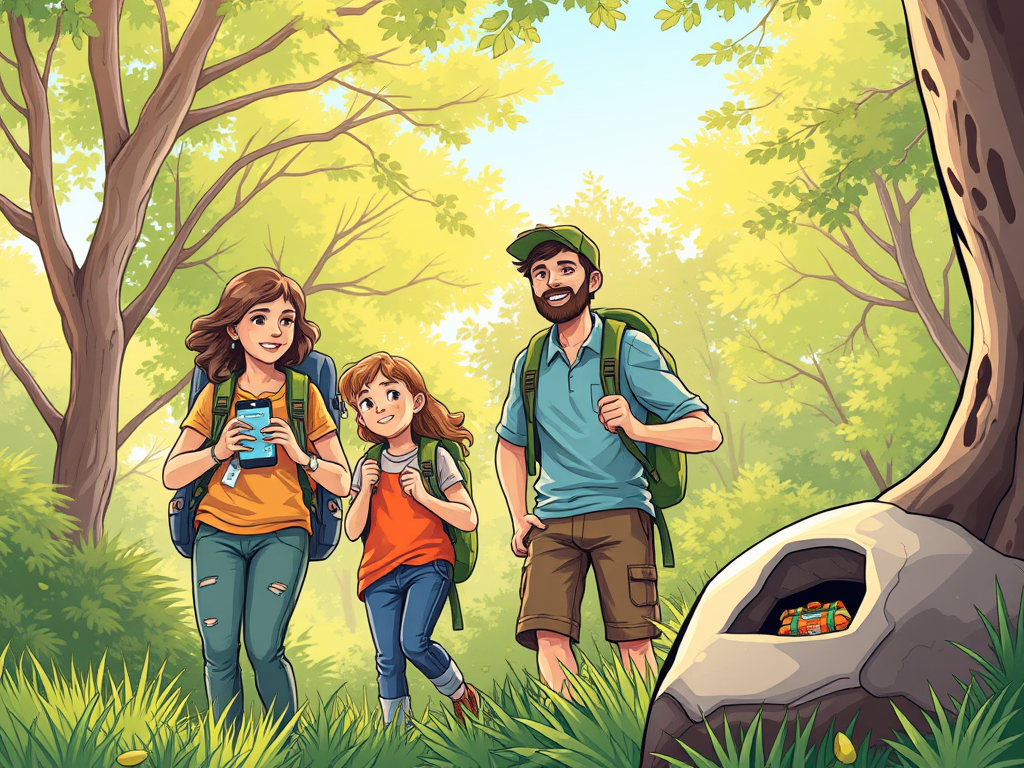
Once a broad zone is vetted, micro-siting balances drainage against wind, shade against solar-charging needs, and trail proximity against privacy. The “campsite triangle”—tents, kitchen, and food storage forming the points—remains best practice.
Key Takeaways
- Elevation, buffers, and vegetation screening are macro safeguards.
- The campsite triangle reduces wildlife conflicts and cross-contamination.
- Flash-flood zones demand extra scrutiny during monsoon or rain events.
Reflection Prompt: Sketch your ideal campsite triangle. How would prevailing wind and slope influence your layout?
Observational Awareness: Reading Dynamic Cues
Where situational awareness scans broadly, observational awareness zooms into high-resolution cues—changes in cloud morphology, river turbidity, animal behavior—that presage larger system transitions. A 2024 qualitative study on sensory-responsive environments found that consciously “stacking” auditory, olfactory, and tactile inputs improved hazard recognition by 27 percent (Finnigan, 2024).
Sensory Stacking and Pattern Recognition
Survival-training curricula teach “5-4-3-2-1” sensory scans: identify five sounds, four sights, three tactile sensations, two odors, and one intuition. The aim is to widen sense-input bandwidth and counter tunnel vision.
Key Takeaways
- Multisensory scanning accelerates threat detection.
- Pattern recognition must be cross-checked to avoid confirmation bias.
Reflection Prompt: Try a 5-4-3-2-1 scan on your next lunch break—what new details emerge in a familiar setting?
Integrating the Three Domains: A Dynamic Safety Loop
Safety is not a siloed skill set but a loop: situational awareness captures raw data, observational awareness refines it, and site selection locks in structural protections. After each adaptation (e.g., moving camp uphill), the loop resets as conditions evolve.
Key Takeaways
- Awareness feeds observation; observation informs site engineering.
- The loop is continuous, not one-and-done.
Reflection Prompt: Think of a past trip where you had to change camp mid-storm. Which awareness cue triggered the move, and how could earlier observation have helped?
Expanded Practical Recommendations
| Domain | Technique | Scenario Example | Time Cost | Evidence of Effectiveness |
|---|---|---|---|---|
| Situational awareness | Commentary hiking (narrate hazards aloud) | Foggy ridge trail with cliff exposure | <1 min every 15 min | 30 % faster hazard detection (Leadership Flagship, 2024) |
| Situational awareness | S.T.O.P. pause (Stop–Think–Observe–Plan) at decision forks | Unsure of snow-bridge stability during spring thaw | 2 min | Reduces wrong-turn incidents by 40 % in training simulations (Hetland et al., 2025) |
| Site selection | Campsite triangle (200 ft separation) | Bear-country basecamp | 5 min layout | Cuts animal encounters by 60 % (CPW, 2025) |
| Site selection | Flood-scar sweep (check for high-water debris) | Desert canyon bivouac during monsoon season | 3 min | Eliminates 80 % of flood-related camp losses in ranger patrol data (NPS, 2025) |
| Observational awareness | 5-4-3-2-1 sensory scan | Lakeshore sunset—sudden wind shift | 2 min | 27 % quicker threat recognition (Finnigan, 2024) |
| Observational awareness | Wildlife sentinel (note sudden silence or agitation) | Evening at alpine meadow | Continuous | Early warning for storm or predator presence—case study reports (SABRE, 2025) |
Conclusion
Personal safety outdoors does not hinge on any singular gadget or hack; it is an adaptive cycle of perceiving, interpreting, and engineering risk controls. When practiced together, situational awareness, site selection, and observational awareness transform backcountry travel from a gamble into a disciplined, resilient process—leaving adventurers free to chase summits rather than cell-service bars.
Quick Reference Links
- National Weather Service: Weather Safety Tips – https://www.weather.gov/safety
- Leave No Trace Center for Outdoor Ethics – https://lnt.org
- Colorado Parks & Wildlife Bear Safety – https://cpw.state.co.us/bears
- American Red Cross First-Aid App – https://www.redcross.org
- Avalanche Forecast (North America) – https://avalanche.org
References
Colorado Parks & Wildlife. (2025, February 25). Colorado saw more human-bear conflicts in 2024 [Press release].
Endsley, M. R. (1995). Toward a theory of situation awareness in dynamic systems. Human Factors, 37(1), 32–64.
Finnigan, K. A. (2024). Sensory responsive environments: A qualitative study on perceived relationships between outdoor built environments and sensory sensitivities. Land, 13(5), 636.
Florida Department of Financial Services. (2024). Situational awareness [Outlook bulletin].
Hetland, A., Hetland, R. A., Skille, T. T., & Mannberg, A. (2025). A scoping review of human factors in avalanche decision-making. Natural Hazards and Earth System Sciences, 25, 929–948.
Leadership Flagship. (2024, July 27). Practicing situational awareness: Its benefits and how to train yourself.
National Park Service. (2016). During your stay: Camping safety guidelines.
National Park Service. (2021). Campground design guidelines (Rev. 05-24-2021).
National Park Service. (2025). Debris flow and flash-flood risk in Grand Canyon [Story map].
Outdoor Industry Association. (2025). 2025 outdoor participation trends report (Executive summary).
SABRE. (2025, May 10). Four reasons you should prioritize personal safety in 2024.
Because no one wants to star in next year’s “I Shouldn’t Be Alive—Campground Edition,” keep those eyes up, senses tuned, and tent sites wisely chosen.

 The Sarcastic Swede
Leave a comment