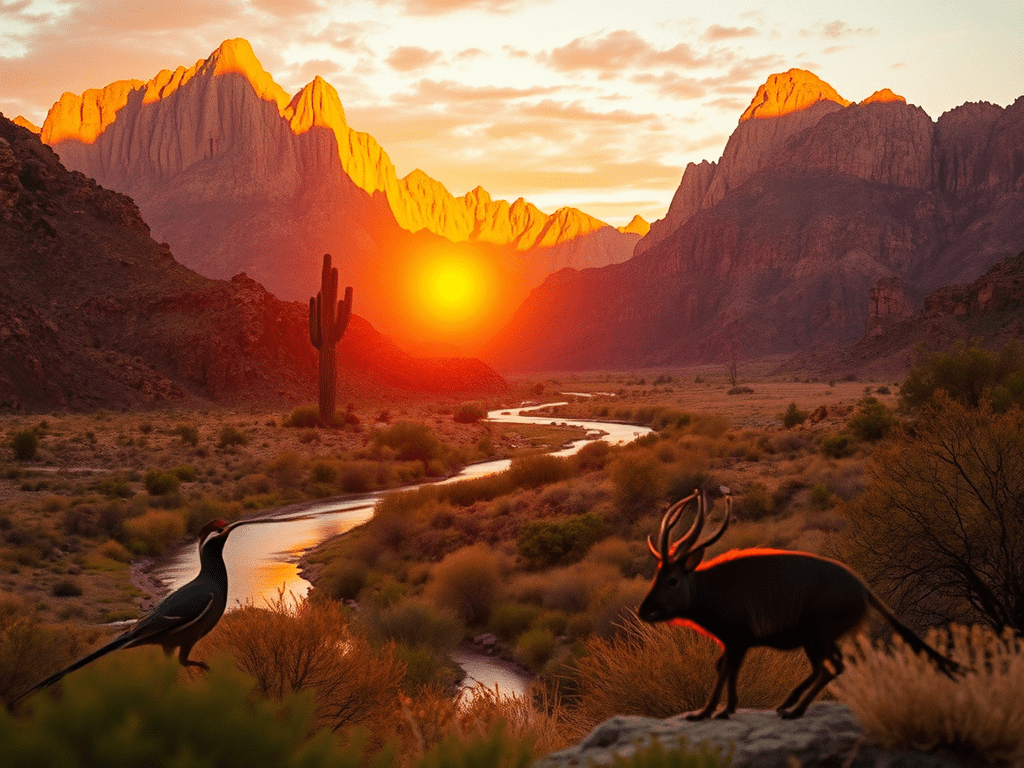
🏞️ Big Bend National Park – Adventure in the Lone Star Wild
📍 Overview
Big Bend National Park, nestled in the remote southwestern corner of Texas along the Rio Grande, is a rugged, majestic expanse of desert, river canyons, and mountain landscapes. Covering over 800,000 acres, it’s one of the most diverse and remote national parks in the U.S., perfect for hikers, stargazers, solitude seekers, and wildlife lovers.
🛣️ Travel Times from Major Texas Cities
- San Antonio: ~6.5 hours (430 miles)
- Austin: ~7 hours (460 miles)
- Dallas: ~9 hours (600 miles)
- Houston: ~9 hours (610 miles)
Big Bend is remote. Expect long, scenic drives and minimal cell service once you’re near the park.
🌡️ Climate & Topography
Topography: Big Bend features three distinct ecosystems:
- Chihuahuan Desert (lowlands)
- Chisos Mountains (elevation up to 7,825 ft)
- Rio Grande River canyons
Climate:
- Summer: HOT (95–110°F in desert areas); cooler in the mountains.
- Winter: Mild days, chilly nights; mountain temps can drop below freezing.
- Best Seasons: Fall and spring for mild temps and best hiking conditions.
- Monsoon season (July–September) brings sudden, heavy thunderstorms.
🦎 Wildlife You Might See
- Mammals: Black bears, mountain lions (rare but present), javelinas, mule deer, coyotes, jackrabbits
- Birds: Over 450 species — including roadrunners, golden eagles, peregrine falcons, and the Colima warbler (found almost nowhere else in the U.S.)
- Reptiles: Lizards, rattlesnakes, turtles
- Insects: Yes, there are scorpions. Yes, you should shake your boots.
🧭 What to Do
- Hiking: Over 150 miles of trails
- Lost Mine Trail (moderate, panoramic views)
- South Rim (strenuous, iconic)
- Santa Elena Canyon (easy, dramatic cliffs)
- Scenic Drives: Ross Maxwell Scenic Drive, River Road (high-clearance recommended)
- Stargazing: One of the darkest skies in North America. Milky Way? Practically guaranteed.
- Rafting/Kayaking: Rio Grande offers mellow to moderate floats.
- Camping: Developed campgrounds, backcountry sites, and primitive roadside camping
- Hot Springs: Historic natural spring near the Rio Grande (short hike required)
🎒 What to Bring / How to Prepare
Must-Haves:
- Plenty of water – 1 gallon per person per day minimum
- Sunscreen, hat, sunglasses
- Sturdy hiking boots
- Maps – No cell signal in many areas
- Snacks and meals – Limited food in the park
- Flashlight/headlamp – Pitch-black nights
- Binoculars – For wildlife and birdwatching
- Layers – Temps swing fast between sun and elevation
Recommended:
- GPS or satellite communicator (especially for backcountry)
- First aid kit
- Permits – Required for backcountry camping and river use
- Cash – Not all places accept cards, and there’s no ATM in the park
🧠 Pro Tips
- Gas up before entering – the nearest stations are in Terlingua and Panther Junction (inside the park).
- Download offline maps (Google Maps or Gaia).
- Always check park alerts for road closures, weather, and trail status.
 The Sarcastic Swede
Leave a comment