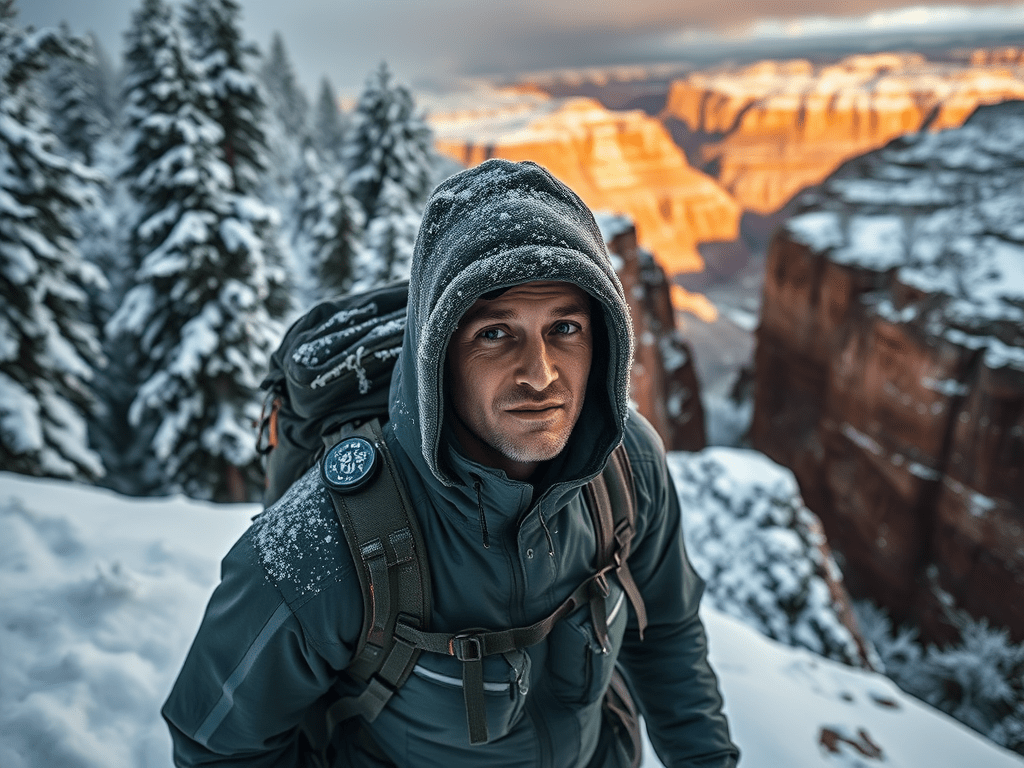
1. Introduction: Beauty, Risk & the “Hold-My-Gorp” Moment
Chasing summits and desert skylines is catnip for anyone whose soul starts vibrating when the topo map unfolds. Yet venture out when thermometers swing wildly north or south of “room temperature,” and the backcountry can turn Darwinian fast. Every year hikers succumb to hypothermia in snow-wrapped forests and to heat stroke on sun-bleached canyon trails—sometimes only steps from help. In 2024 alone the National Park Service logged 358 visitor fatalities, with environmental exposure among the leading culprits.(nps.gov)
The goal of this essay is equal parts alarm bell and owner’s manual. We will (1) unpack the major cold- and hot-weather injuries, (2) offer detection cues your smartwatch can’t give you, (3) lay out prevention tactics that would make your old Scout leader proud, and (4) close with first-aid protocols that buy precious time when “Search and Rescue” reads more like “Maybe Tomorrow.”
2. Cold-Weather Injuries: When Heat Goes Missing
2.1 Hypothermia (The Silent Energy Heist)
Pathophysiology. Core temperature slides below 95 °F (35 °C), and metabolic reactions decelerate like a laptop in Arctic mode. Mild cases trigger shivering and “umbles” (mumble, stumble, fumble); severe cases cause paradoxical undressing, arrhythmias, and eventual coma.
Stats & Context. CDC surveillance still lists hundreds of hypothermia deaths annually despite modern gear.(cdc.gov)
Early Detection. Look for—
- Progressive silencing: speech slurs, apathy, irrationality.
- Fine-motor fails: dropped trekking poles, botched buckle clips.
- After-drop clues: cold, rigid trunk even after a “warm-up” break.
2.2 Frostbite (Cryogenic Catastrophe)
Ice crystals form in tissue; circulation collapses. Fingers, toes, ears, and nose are the usual sacrifices to the weather gods. A deceptively “numb” digit can still be salvageable if thaw is controlled.
2.3 Non-Freezing Cold Injuries
- Chilblains: itchy, purple plaques on skin chronically exposed to wet cold.
- Immersion foot/trench foot: prolonged wetness at 30–60 °F (0–16 °C) macerates skin and blood vessels.
3. Hot-Weather Injuries: When Cooling Fails
3.1 Heat Cramps & Heat Syncope
Electrolyte imbalance and vasodilation humor gone wrong—usually the pre-show before bigger trouble.
3.2 Heat Exhaustion
Heavy sweating, tachycardia, core temp up to 104 °F (40 °C). Victims may look merely “tired,” fooling partners into pushing on.
3.3 Heat Stroke (The ISP—Internal Solar Panel—Meltdown)
Core ≥ 104 °F plus CNS dysfunction (confusion, seizures). Mortality can top 30% even with hospital care. WHO calls it “a medical emergency with a high case-fatality rate.”(who.int)
3.4 Exercise-Associated Hyponatremia
Over-zealous hydration dilutes sodium; symptoms mimic heat stroke but skin is often cool and clammy. Rapid sodium correction, not just water, is lifesaving.
Real-world tragedy: In June 2024 a 69-year-old Grand Canyon hiker collapsed on the River Trail under 120 °F (49 °C) temps and could not be revived.(people.com) The canyon averages a dozen such deaths yearly, many from unrecognized heat illness.(nps.gov)
4. Prevention: Outsmarting the Weather App
- Forecast Deep-Dive. Go beyond “high/low.” Check hourly temps, dew point, wind chill, heat index, and nighttime lows that could flip your sunny hike into a 2 a.m. frost-fest.
- Route Timing. In desert terrain, hike pre-dawn and post-sunset; in alpine zones, summit early to dodge afternoon storms and radiative cooling at dusk.
- Layer Logic (Cold).
- Base: moisture-wicking synthetic or merino (cotton = coffin).
- Mid: lofted fleece or down.
- Shell: wind- and waterproof, vent-friendly. Remove or add proactively to prevent sweat-soak (evaporative heat robbing).
- Heat Armor.
- Light-colored, UPF-rated clothing; wide-brim hat; neck gaiter soaked in water.
- Electrolyte strategy: 0.5–1 L h⁻¹ in moderate heat; add 0.5 g NaCl L⁻¹ for > 3 h exertion.
- Pacing & Acclimatization. Your ego may summit; your organs might not. Add an extra day for heat or altitude acclimation when possible.
- Nutrition. High-calorie, high-fat snacks (nuts, cheese) in cold; salts and simple carbs (pretzels, dried fruit) in heat.
- Equipment Essentials.
- Emergency bivy or space blanket (reflective both ways).
- Chemical hot packs and instant cold packs.
- Digital thermometer (ear or axillary) if you lead groups.
- “Buddy Checks Are Sexy.” Scheduled mutual skin/mental-status inspections. Set phone alarms if banter distracts.
5. Detection in the Wild: The Human Dashboard
| Check Point | Cold Queue | Hot Queue | Tools |
|---|---|---|---|
| Skin | blanching → waxy pallor → purple/black | red → flushed → dry & hot | Bare-skin look |
| Speech | coherent → mumbling → silence | chatty → irritable → incoherent | Ask open-ended question |
| Motor | zipper test fails | stumbling or sudden lying down | Simple tasks |
| Vitals | slow pulse, shallow resp | rapid pulse, shallow resp | Wearable or manual |
Use these cues every hour in hazardous conditions. Early detection equals a shorter headline later.
6. First Aid: Buying Time When Phones Have No Bars
6.1 Cold-Injury Protocols
| Step | Hypothermia | Frostbite | Trench/Chilblains |
|---|---|---|---|
| 1. Remove Stressor | Shelter from wind; strip wet layers | Same, but do not walk on frozen foot tissues | Dry & warm area |
| 2. Core Re-Warm | Insulate torso first (sleeping bag + buddy heat); warm drinks if conscious; no alcohol.(cdc.gov) | Whole-body re-warm prevents re-freeze risk | |
| 3. Local Treatment | N/A | Circulate warm (37-39 °C / 99-102 °F) water bath 15–30 min until skin pink and pliable; never rub snow/ice | Re-warm gradually; topical corticosteroid if available |
| 4. Monitor | Check pulse for 60 s before CPR—heart may be slow | Expect severe pain on thaw; give NSAIDs if not contraindicated | Watch for swelling/ulcers |
| Evac? | Moderate–severe: yes | All deep frostbite: yes | If tissue damage or infection |
6.2 Heat-Injury Protocols
| Step | Heat Exhaustion | Heat Stroke | Hyponatremia |
|---|---|---|---|
| 1. Remove Stressor | Shade, loosen clothing | Same; priority cooling | Shade; stop fluids |
| 2. Rapid Cooling | Cool packs groin/axilla; oral electrolyte drinks | Ice-water immersion or evaporative mist + fan—target < 102 °F within 30 min | None until sodium lab?—field best guess: salty snack if conscious |
| 3. Fluids | 0.5 L sports drink; sip every 10 min | NPO if altered—may aspirate | Hypertonic fluids medical only |
| 4. Monitor | Vitals q 10 min; stop cooling at shivering | CNS status—seizure kit if trained | Watch for pulmonary edema |
| Evac? | If no recovery < 1 h | Always emergent | Always emergent |
Pro tip: Mark onset time; clinicians treat faster when they know the stopwatch started an hour ago.
7. First-Aid Kit Power-Ups for Extremes
- Rehydration salts sachets (WHO formula).
- Waterproof thermometer (flex-tip).
- Reusable cold-spray bottle (for evaporative cooling) and collapsible 2 L bucket (for frostbite baths).
- SAM splint doubles as windbreak for hot packs or immersion bath wall.
- Glucose gel—shivering plus hypoglycemia is a nasty combo.
- Rectal probe adapter (if guiding groups) for core temp accuracy—unpopular yet lifesaving.
8. Conclusion: Adventure with an Operating Manual
Extreme cold and heat transform idyllic backdrops into physiological battlegrounds. The good news? Most tragedies are preventable with a mindset that marries curiosity to caution—and a dash of gallows humor to keep morale high. Plan obsessively, intervene early, and remember that the bragging rights you covet require surviving the trail in one piece. As the Park Service bluntly warns during heat advisories: “There are no shortcuts to safety.”(nps.gov)
So hydrate smart, layer smarter, and when Mother Nature cranks her thermostat to “absurd,” have the wisdom to turn back—because the only place “type-three fun” belongs is someone else’s cautionary tale on Reddit.
Stay sharp, stay alive, and may your adventures end with stories, not symptoms.

 The Sarcastic Swede
Leave a comment