The legend of Bigfoot has captured the imagination of many, sparking curiosity and debate for decades. This mysterious creature, often depicted as a large, hairy being roaming the forests of North America, fuels countless stories and sightings. Despite skepticism, the belief in Bigfoot holds significant cultural and scientific importance, highlighting humanity’s fascination with the unknown and the search for evidence beyond the ordinary.
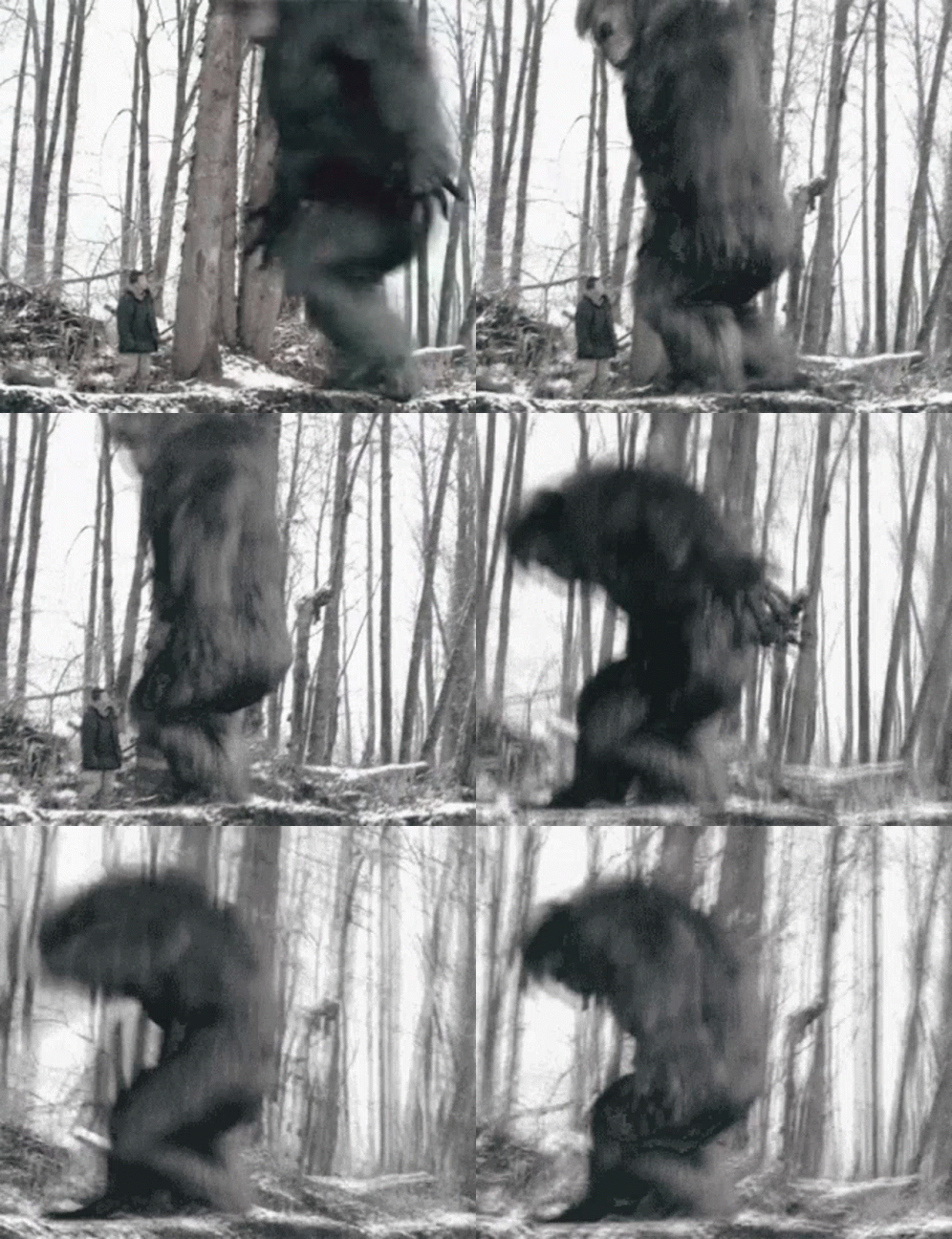
One compelling reason to believe in the existence of Bigfoot is the numerous eyewitness accounts reported throughout history. Many people, from hikers to local residents, claim to have seen this elusive creature. For instance, in 1958, a construction worker named Jerry Crew discovered large footprints near Bluff Creek, California, reigniting interest in the Sasquatch phenomenon. These accounts often share similar details, such as the creature’s height and appearance, suggesting a consistent experience among witnesses. This pattern raises questions about the possibility of an undiscovered species living in remote areas.
Moreover, the vast wilderness areas in North America provide ample habitat for creatures like Bigfoot to exist undetected. National parks and forests, such as the Pacific Northwest, cover millions of acres, allowing for a thriving ecosystem that could support such a being. Additionally, some scientists argue that undiscovered species are not uncommon. For example, between 1997 and 2007, over 1,000 new species were found in the Amazon rainforest alone. This indicates that the natural world still holds many secrets, and the existence of Bigfoot may not be as far-fetched as it seems.
Furthermore, the cultural significance of Bigfoot cannot be overlooked. The creature has become a symbol of wilderness and mystery, representing the untamed aspects of nature. Different cultures have their versions of Bigfoot, such as the Yeti in the Himalayas and the Yowie in Australia. These myths often serve as cautionary tales, emphasizing respect for nature and the unknown. The fascination with Bigfoot encourages exploration and appreciation of the natural world, inspiring countless documentaries, books, and movies that keep the legend alive.
In conclusion, the belief in Bigfoot remains a captivating topic, driven by eyewitness accounts, unexplored habitats, and cultural significance. While skeptics may dismiss the creature as a myth, the evidence suggests that the mystery surrounding Bigfoot deserves further investigation. As the search for knowledge continues, embracing the wonder of the unknown can lead to exciting discoveries. Whether or not Bigfoot exists, the journey to uncover the truth can inspire a deeper connection to the world around us.


 The Sarcastic Swede
Leave a comment